

Beyond the Steppes: Exploring the Diverse Landscapes of Mongolia
Eastern Mongolia: Eastern Mongolia boasts diverse landscapes, from the vast grassy steppe to the arid Gobi and the dense forests of the Khentii Mountains. The birthplace of Genghis Khan in the Khentii Mountains adds a historical dimension to the region. Unique rock formations like the Flaming Cliffs in the Gobi and granite cliffs in Ikh Nart showcase the geological variety that characterizes Mongolia's eastern frontier.
Conclusion: Exploring Mongolia beyond the steppes unveils a land of remarkable contrasts and biodiversity. From the stark beauty of the Gobi Desert to the alpine allure of Khuvsgul Lake, each region contributes to the country's allure. Embarking on a journey across these diverse landscapes is an invitation to witness the multifaceted beauty that defines Mongolia, a nation where nature's canvas paints a myriad of breathtaking scenes.

About the Author: Bayarsaikhan Ganbat
Publication Date: 9/8/2022
Mongolia, often associated with the vastness of its steppes, unfolds as a tapestry of diverse landscapes that transcend the stereotypical image. Beyond the endless horizons of the steppes, this captivating country reveals a mosaic of natural wonders, each contributing to the rich tapestry of Mongolia's geographical diversity.
The Gobi Desert: Stretching across the southern part of Mongolia, the Gobi Desert stands as one of the world's most iconic arid landscapes. Contrary to common perceptions, the Gobi is not a sea of sand but a realm of vast gravel plains, rocky outcrops, and towering sand dunes. Here, the shifting sands of the Khongor Sand Dunes meet the fascinating geological formations of the Flaming Cliffs, creating a surreal landscape that captivates the adventurous traveler.
Orkhon Valley: A UNESCO World Heritage Site, the Orkhon Valley offers a lush contrast to the arid Gobi. Central Mongolia's rolling hills, meandering rivers, and pristine lakes adorn this picturesque valley. The Orkhon Waterfall, cascading down 20 meters, becomes a natural centerpiece amid the serene beauty of the valley. Rich in historical significance, the Orkhon Valley bears witness to the nomadic empires that once roamed its verdant expanses.
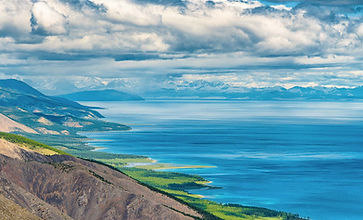
Khuvsgul Lake: In the northern reaches of Mongolia lies Khuvsgul Lake, often referred to as the "Blue Pearl of Mongolia." This pristine alpine lake, surrounded by dense forests and bordered by majestic mountains, provides a haven for those seeking tranquility. A stark contrast to the arid landscapes, Khuvsgul Lake invites travelers to explore its crystal-clear waters and indulge in the breathtaking beauty of Mongolia's northern wilderness.
Altai Mountains: The western region of Mongolia is dominated by the Altai Mountains, the highest in the country. Towering peaks, glaciers, and deep valleys characterize this rugged landscape. The Tavan Bogd National Park, home to Mongolia's highest peak, Mount Khuiten, offers a playground for mountaineers and nature enthusiasts alike. The Altai Mountains reveal a side of Mongolia defined by alpine grandeur and challenging terrains.